

Case Study | Energy Services
Leaders who could keep pace with the business.
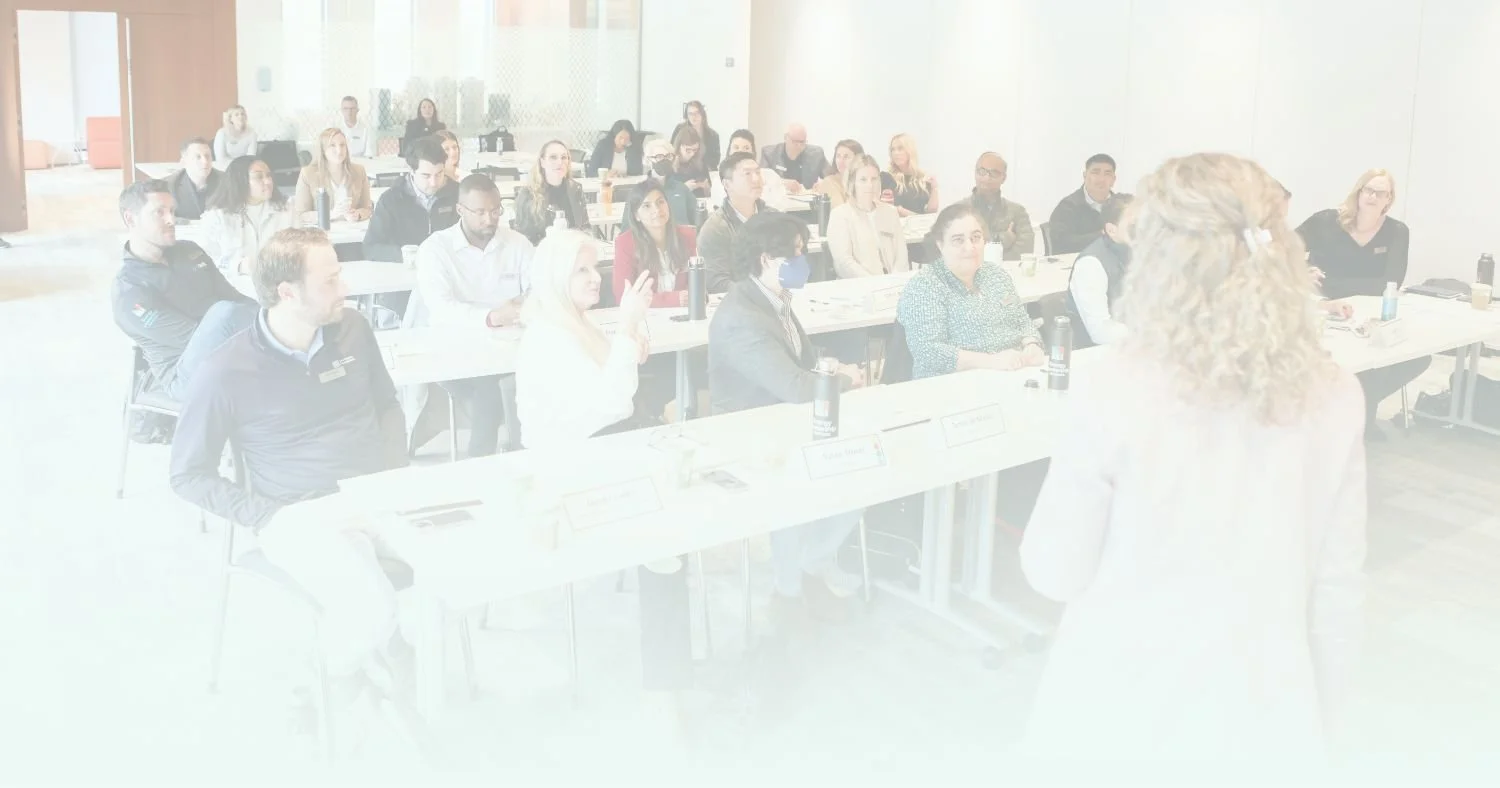
A PE-backed energy services company was scaling fast through growth and acquisition, and its new and emerging leaders needed to keep pace. After the program, those leaders were better equipped to lead through continuous change and uncertainty as the business kept growing.

95%
Said the content applied directly to their leadership role
100%
handle difficult conversations more confidently
(strongly agree / agree)
100%
stay more composed in ambiguous situations
(strongly agree/ agree)
01 / THE CONTEXT
The Challenge
The company was growing fast under private equity ownership, and many strong technical people had moved into their first management roles. Senior leadership wanted a stronger leadership bench to support that growth.
The new leaders were running into three common problems:
Building trust with peers and teams, often across sites and in hybrid setups
Confidence and assertiveness: making their voices heard and holding people accountable
Resistance to change from established employees when they introduced something new
02 / THE APPROACH
What we built.
The program was designed backward from the business: strategic priorities first, then the competencies that serve them, then the behaviours we wanted to see, and only then the content.
The six modules - delivered over 4 months:
Leading Self with DiSC & Neuroscience foundations
Emotional Intelligence with Agile EQ
Mindset and Growth Orientation
Effective Communication
Team Building and Collaboration
Foundational Management Skills (Delegation & Time Management)
What made the learning stick
Pre-work, and a conversation with their own manager before starting
Peer accountability through a friendly cross-department challenge
Habit-building text nudges between sessions
One-on-one integration coaching for every participant
03 / THE IMPACT
What Changed
Leaders described specific changes in how they led, in their own words.
01.
Emotional intelligence and self-leadership
Leaders stopped carrying everything themselves and started holding others accountable.
Without this skill, one leader recognized: “It would again fall to me to make everything happen and be frustrated over lack of results.”
02.
Communication and influence
Leaders addressed issues directly and set clearer expectations.
One leader set up a new monthly deadline meeting with the team: “we can set and agreed on achievable goals.”
03.
Change leadership
Brings others along
through change
When a team became short-staffed, the leader reset expectations with compassion. Another rallied the team under tight deadlines and moved forward with the majority on board.
“The collaborative and honest discussions amongst our peers.”
Participant, on the most valuable part of the program
04 / THE LASTING VALUE
After the program
The best sign a program worked is that people keep going without you, and these leaders did.
The learning continued without outside support after the program ended.
Relationships became a working network. Leaders used each other to solve problems across departments and find internal efficiencies.
The network held through change. When senior leadership changed, this group leaned on each other for support and stability.
A True Partnership
“Working together felt like a true partnership. The content was never off-the-shelf. It was built for us, and you could tell. Heather took the time to understand our business, our people, and what would land well. She challenged our managers in the right ways and created space for meaningful dialogue. The facilitation was engaging and grounded.”
Andrew P., President
LET’S TALK ABOUT YOUR TEAM
Is this your organization?
This program may fit if:
Your engagement survey is asking for more leadership development
You're promoting strong technical people into their first leadership roles
Your leaders work across sites or departments and rarely connect
You don't have internal HR capacity to design and run a program yourself
Every program is built around your strategy and culture, not taken off the shelf.